Friday, June 6, 2014

Research Around The World


The Early Childhood Development Virtual University (ECDVU) Sub-Saharan Africa (SSA) is a virtual university for early childhood research worldwide. Some of the most current topics presently are:

·         Strengthening Africa's contributions to child development research: Overview and ways forward. Child Development Perspectives.

·         Developing an international network to support early childhood development (ECD): Results from experience in Africa

·         Think Locally, Act Globally: Contributions of African Research to Child Development

Each of these topics pertain to the current efforts to encourage and maintain early childhood networks and research in Africa. The goals of these research tactics are to improve the capacity of African countries to attain early childhood programs by laying a strong foundation, especially for the most vulnerable and disadvantaged children. Also, to increase understanding among stakeholders of the importance of children’s early development and learning as a key ingredient in children’s success.

The efforts to promote early childhood and secondary education worldwide takes on a variety of research and projects in order to attain the goal of global education available for everyone. The “Brain Gain” video tells the success stories and the accomplishments of graduates who participated in the ECDVU program.

I found the international article on the World Bank project on efforts for the country of Guyana to be extremely interesting as my family is originally from there. The project proposes a secondary education improvement project for Guyana to strengthen the capacity of secondary school mathematics teachers nationwide, and to increase enrollment in general secondary schools in targeted regions.
The video for Brain Gain is below. Enjoy!

http://www.youtube.com/watch?v=MykI_YQQkdM&list=PLB13EEF302E2C8F23
 

Tuesday, May 20, 2014

Children with Cancer: Positive Benefits of Camp


               Countless research has been conducted over the years towards the cure, treatment, and alleviation of cancer discomfort from children to adults in an effort to overcome an inevitably fatal illness to a life-threatening chronic disease. The aim of these studies was to critically review all research examining the effect of camps on health related quality of life in children with chronic illnesses. Interestingly, a positive research finding for young cancer patients was the beneficial involvements of participants in camp experiences and the reduction of anxiety which helped them to better cope with their terminal illness. Research supports the positive emotional, physical and spiritual benefits of camps and retreats for cancer patients. “A number of strategies have been used to reduce feelings of anxiety experienced by pediatric cancer patients, including “diversions or activities as means of catharsis” (Goertzel & Goertzel, 1991, p. 538). One relatively new method that has been used to help children cope with their terminal illness has been the development of summer camp programs designed especially to meet their needs.” (Winfree, Williams, & Powell 2002). Although, there is not a cure for cancer yet I found this discovery made by research efforts to be truly uplifting towards creating a support system, while helping young children reduce disease related anxieties, and boost self-confidence.

 References
 Winfree, Christy, Powell Gwynn, Williams Richard. (2002). Children with Cancer - Positive Benefits of Camp. Retrieved from http://gpowell.myweb.uga.edu/Cancer_Nov_2002.htm

Bekesi, Andrea. (2011). Health Related quality of life changes of children and adolescents with chronic diease after participation in therapeutic recreation camping program. Retrieved from http://www.hqlo.com/content/9/1/43

Thursday, May 15, 2014

My Personal Research Journey


I chose the  topic of public policy for my simulation due to the current state of early childhood and it’s recent
recent media attention, calling for the historic  investments to be made in early childhood education. President Obama’s early learning plan for stronger investments in early childhood entails participation for all in children in high quality programs. Major changes are in the process of being made that will have a major impact on the field, and as a parent and an educator I believe that the key to major changes in education is through the venue of public policy. This will ensure the window of opportunity in young children is utilized to it’s full potential.
Initially, I have learned that one of the most important aspects in beginning to conduct research is the determination of a specific topic, as well as the ability to explore a variety of questions surrounding it. I speculate that narrowing down a specific research question will be the most difficult part of the whole process. Additionally, I think that filtering  through an abundance of resources might also be rather difficult due to the large variety of information that is out there on the web.
Constructing the research chart was an interesting experience, I found that I needed more information than the given definition in the book and found myself exploring other sources for a more detailed clarification that I could explain in my own words.

I wonder if any other colleagues have had this issue due to the large reference to research definitions and lack of clarification in the glossary?

Wednesday, April 23, 2014

Awareness of International Early Childhood Education


Many times environmental, social and economic challenges that are apparent in the early childhood education field are often global in scope and require collaborative solutions that would require involvements of professionals, or organizations all around the world.
Knowledge of the international early childhood field can only benefit one as a professional, as well as for personal growth and skills obtained by individual participants. Learning about how other cultures allows me to develop a better understanding and insight into issues or concerns that affect the early childhood community, this will also enable me to gain a better viewpoint for similar problems in my own local community. The exposure to social/cultural differences, new educational methods, systems and unique global perspectives will give me the opportunity for a broader viewpoint from a global perspective. The cross-border relationships that have the potential to be formed may also be helpful towards becoming the foundation of future transactions or collaborations. Acquiring knowledge in this field will arm an individual with cross-cultural skills and an international perspective of that of empathy or learning to see through the eyes of others from different backgrounds. Learning about ECE globally will enable me to:

  • Learn new skills like cultural awareness and leadership for my future career
  • Gain skills in cross-cultural communication, flexibility, and problem solving
  • Acquire authentic  global outlook and perspective on ECE
Goal: Develop international connections, and learn new skills of cultural awareness, and leadership. Also gain skills for cross cultural communication, and collaborations through partnerships.

References

Educational International Early Childhood Education. (2014). Retrieved from: http://www.ei-ie.org/en/websections/content_detail/3265

Sunday, April 20, 2014

Issues related to international early childhood education


After viewing the UNESCO's early childhood care and education webpage, I came upon an article examining the recent big push to accelerate early childhood education in Africa. The benefits of early childhood education both n America and internationally is becoming widepsread knowldege that can only work in favor of improving preparation of young children for school and learning. Professionally, I believe this should be a goal of all early childhood professionals, towards the benefits and well being of all young children worldwide. The efforts of the organization include 7 training modules to include cultural context and modules to include indigenous early childhood care and education. Countries Angola, Sao Tome & Principe, Swaziland and Zambia have already agreed to focus on boosting their ECE tactics. Although, plans are in progress Africa still struggles with early education, only one out of four children get the opportunity to attend some kind of preschool education. In any case, this new push for early childhood is a step in a postive direction towards the academic progress for young children in Africa.

References

www.UNESCO.org/

Tuesday, April 8, 2014

Sharing Web Resources

NAEYC The nation's leading voice for high-quality early childhood education for children from birth though age 8The NAEYC website contains a plethora of outside links, related to child welfare, education and resources within the field of early childhood. This includes links to the (NACCRRA) National Association of Child Care Resource and Referral Agencies, NAEYC accreditation site, as well as many links to articles within its site that pertain to important early childhood issues.
I have examined the resource for families under the site, which contains information for families regarding current early childhood issues, policies, education tips, and advice for parents. Under the blog, issues are discussed on how parents can become more involved in their child’s developments, topics like Self-Directed Play: In the Moment Children Can’t Always Answer “What Are You Doing?”, and Evaluating Children's Media: How Do You Decide What's Educational? Provide parents with more in depth informations and guidance about specific issues relating to early childhood. There is also a whole section on learning through music. One article discusses the important role of music in early childhood, as well as the benefits of singing to young children.

The topic of equity is presented throughout the website in multiple facets including blogs, and articles from researchers, and early childhood professionals. Additionally, the topic of equity has been discussed as a feature topic for the upcoming 2014 National Institute for early childhood professional development. The organization also provides a diversity and equity forum that provides an environment in which to come together for mutual education, self-reflection, networking, and strategic planning. NAEYC’s dedication to squashing and addressing the inequities in early childhood makes me realize that the possibility to abolishing these inequities starts with the support of values and contributions of all families to the community and children’s lives, only awareness of inequities can educators and parents come together to change things for the better. 

Resources: 
NAEYC Website retrieved from: http://www.naeyc.org/

Thursday, April 3, 2014

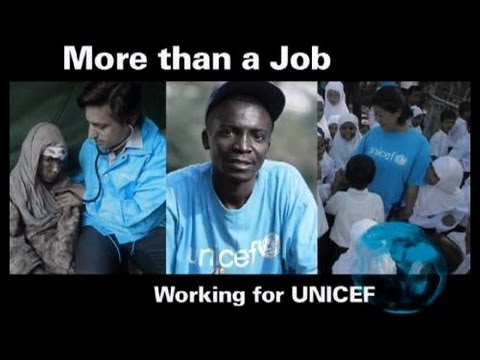
Podcast: UNICEF Special Ambassador Pau Gasol Making Early Childhood a Priority

This week I had the opportunity to examine a podcast that interviewed Los Angeles Laker, Pau Gasol who is acts as a special ambassador for UNICEF along with the Nelson Mandela Foundation. He discusses the importance of their initiative, towards a global campaign towards the critical need for awareness in early childhood issues internationally. Among many of his efforts with the organization, he shed some light on the problems in South Africa, which are effecting many children under the age of 5. A large amount of young children, are quite simply not able to even attend school, due to both minimal institutions, and the precedence of either helping at home or working to help support their families. There are also even large issues that cause education to fall to the wayside including health issues of malnutrition and outbreaks of malaria. The organization is continuously making efforts to combat these problematic roadblocks by building more schools, and providing clean accessible water and meals to students and families. Ultamitately, Gasol stressed the significance of making the issue of awareness in ECE globally a priority for everyone. He’s even written an ebook that’s available world wide in three different languages called “Give a Day” a children’s book that contains the theme of being fortunate to young readers, and establishes a message of circumstances of other children in different parts of the world.